009│海の向こうから来た先生
どうやら今、海外では”Koji”に関心のある方が増えているようです。この春、山川醸造では麹や醤油の醸造に関心があるという海外の方2人を研修で受け入れました。
きっかけは昨年10月に受け取った2通のメッセージでした。
一通はドイツ在住の青年・EladからのDM。もう一通は、オランダ在住の工藤さんからのメールでした。工藤さんは現地でChoro Koji Fermentationを立ち上げ、そばの実を使った味噌や醤油を製造されている方。お会いした際にいただいたそば味噌は、発想も味もわたしの想像の外にあって、とても印象に残っています。
どちらも、麹に興味のある本人(Elad)や友人(Tania)が日本へ行くので、何日か山川醸造で体験をさせてもらえないかという内容でした。
こんな話、今まで聞いたこともないのに、それが同じタイミングで来るなんて。
学生の頃、英語は5教科の中で一番苦手だったわたしは、2年前だったら断っていたと思います。でも、ここ2年ほど、海外の方の見学対応が少しずつ増え、不慣れな英語にあっぷあっぷしながらも続けてきた今、なぜだか自然と断り方ではなく受け入れ方を考えていました。
そしてこの春、3月にはElad、4月にはTaniaが、それぞれ約1週間、山川醸造にやって来ました。
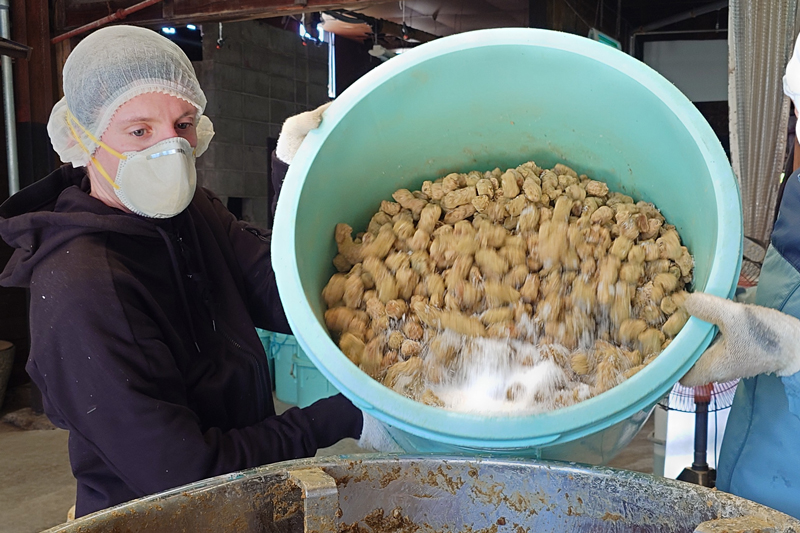
面白がって受け入れを決めたものの、実は来る直前は少しナーバスになっていました。いまでこそ人前に立つことは多いのですが、わたしはもともと人と話すのがそれほど得意ではありません。1週間も一緒にいて会話は続くだろうか。そもそも英語そんなにしゃべれないじゃん。
そんな心配はすぐになくなりました。
作業中は翻訳アプリも使えないので、本当に簡単な英語で話していたと思います。それでも彼らは発酵への知識と興味を総動員して、わたしの言いたいことを理解してくれるんです。不思議なことに話が通じてしまう。
発酵って言葉の壁を越えられるんだなぁ。
彼らの質問はとても幅が広く、作業手順や管理方法だけではありませんでした。その意味や背景、日本人にとっては当たり前すぎて説明したこともない文化的なことにまで及びました。簡単な英語で説明しようとすると、とても難しくて、当たり前だと思っていたことを細かく分解して考えなければなりません。
説明しているうちに「ああ、そういうことだったのか」と、自分で納得する場面も何度もありました。彼らが研修だと思って来てくれた時間は、わたしたちにとっても自分たちの仕事を見つめなおす勉強の時間になったように思います。
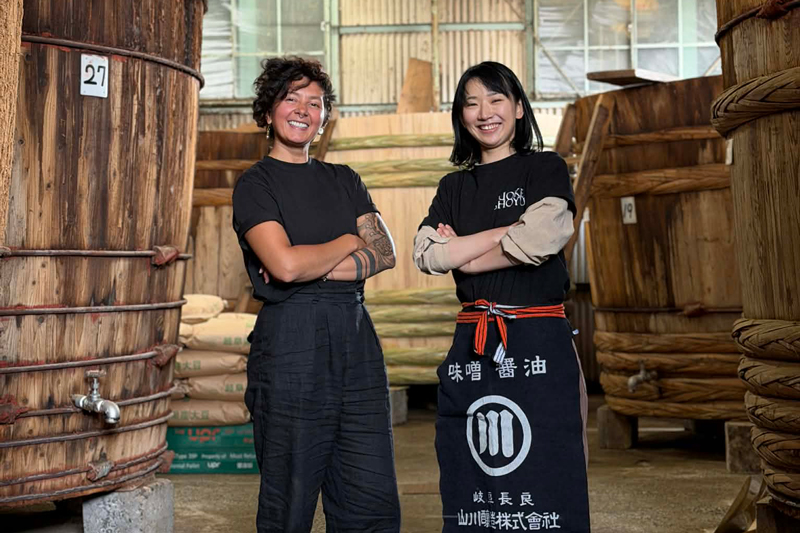
Elad、Tania、来てくれてありがとう。
発酵を学びに来てくれた一週間でしたが、わたしたちもたくさんのことを学ばせてもらいました。まだうまく言葉にできませんが、二人が帰ったあとも、もやもやと、わくわくと考え続けていることがたくさんあります。またそれはそのうちに。
It seems that interest in koji has been growing around the world recently. This spring, we welcomed two visitors from overseas to Yamakawa Jozo for short internships, both of whom were interested in koji and soy sauce fermentation.
It all started with two messages I received last October.
One was a DM from Elad, a young man living in Germany. The other was an email from Mr. Kudo, who lives in the Netherlands. He is the founder of Choro Koji Fermentation, where he produces miso and soy sauce using buckwheat. When we met, he shared some of his buckwheat miso with me. Both the idea behind it and its flavor were completely outside my expectations, and it left a strong impression on me.
Both messages asked essentially the same thing: someone passionate about koji would be visiting Japan and wondered if they could spend a few days learning at Yamakawa Jozo.
I had never received requests like these before, let alone two at almost the same time.
When I was a student, English was my least favorite subject. If these messages had arrived two years earlier, I probably would have said no. But over the past couple of years, we have gradually welcomed more international visitors to the brewery. While struggling through conversations in imperfect English, I somehow found myself thinking not about how to decline, but about how to make it work.
And so, this spring, Elad from Germany joined us for about a week in March, and Tania from the Netherlands spent about a week with us in April.
Although I was excited about the opportunity, I was also a little nervous beforehand. These days I often find myself speaking in front of groups, but I am not naturally someone who enjoys talking with people. Would we be able to keep a conversation going for an entire week? And honestly, my English isn’t that good.
Fortunately, those worries disappeared almost immediately.
During brewery work, there isn’t much opportunity to use translation apps, so I was communicating in very simple English. Yet somehow, they always understood what I was trying to say. They drew on their knowledge of fermentation and their genuine curiosity, filling in the gaps where my language skills fell short.
Somehow, we were able to communicate.
It made me realize that fermentation can cross language barriers.
Their questions covered a surprisingly wide range of topics. They weren’t only interested in production procedures or quality control methods. They wanted to know why we do things a certain way, where those practices come from, and even cultural details that are so natural to Japanese people that I had never thought to explain them before.
Trying to answer these questions in simple English was surprisingly difficult. I had to break down things I had always taken for granted and think about them piece by piece.
More than once, I found myself thinking, “Ah, so that’s why we do it that way.”
The time they spent here as trainees became a valuable opportunity for us as well. It encouraged us to step back and reflect on our own work from a different perspective.
Elad and Tania, thank you for coming.
You came to learn about fermentation, but I feel that we learned just as much from you.
I still can’t quite put everything into words. Even after you left, there are many ideas that continue to stay with me—some still unresolved, some fascinaiting, all worth thinking about.
Perhaps I’ll be able to write about them another time.